
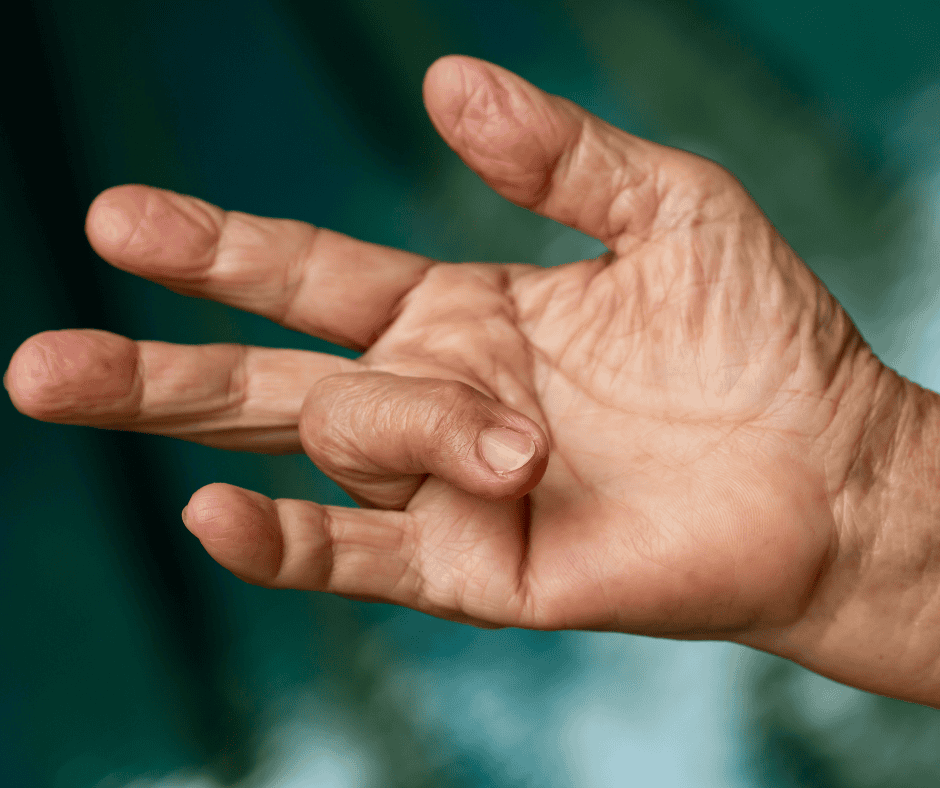
Trigger finger, also called stenosing tenosynovitis, is a common condition that affects the flexor tendons of the fingers or thumb. It causes pain with a feeling of "clicking", "catching" or "locking" when the finger is bent or straightened. Sometimes the finger gets stuck in a bent position and the patient has to open it with the other hand. The main problem is usually at the level of the A1 pulley near the base of the finger, where the passage of the tendon inside its sheath becomes tight because of inflammation and local thickening of the tendon or the sheath around it.
The problem is not usually dangerous, but it can be very annoying because it affects daily function: gripping objects, holding a pen, opening doors, carrying bags, using a phone, and even simple morning tasks. As the condition progresses, it can move from pain or roughness to a real blockage of finger movement.
How common is trigger finger?
Classic references and recent reviews indicate that trigger finger affects about 2% to 3% of the general population during their lifetime, and clearly more among people with diabetes. Some sources say the rate may rise to about 10% in diabetes, while other studies and reviews report a wider range of 5% to 20%, or even 36%, depending on the population studied, the way it is counted and the clinical group. So the safest scientific message for the patient is: trigger finger is relatively common, and becomes clearly more common in people with diabetes and some metabolic and inflammatory diseases.
The condition is also more common in women, and tends to appear more in the fifth and sixth decades of life. In a large population study from South Korea, the annual incidence was about 63.09 per 100,000 person-years, and it was several times higher in women than in men.
Why does trigger finger happen?
The basic idea is simple:
The tendon that bends the finger passes through a narrow fibrous tunnel. When inflammation and thickening develop where the tendon passes, or the A1 pulley becomes tight, the tendon can no longer glide smoothly. The patient then feels pain, then clicking, and later catching or locking. Sometimes a small nodule forms on the tendon, and this nodule "catches" as it passes through the narrow area.
It is important to correct a common belief: the condition is not always the result of simple "overuse". It is usually a mix of mechanical factors, inflammatory changes and local thickening of the tendon or sheath. So it can appear even without a clear history of injury.
Who is more likely to get it?
The chance increases in these situations:
People with diabetes, some thyroid diseases, inflammatory joint diseases, conditions linked to carpal tunnel syndrome, and some people who use the hand for repetitive or forceful gripping work. It may also come with other metabolic disorders. This does not mean everyone with these conditions will develop it, but having them makes it more likely and sometimes affects the response to treatment, especially steroid injection.
What symptoms does the patient feel?
The most common symptoms are:
Pain at the base of the finger on the palm side, clicking or a tapping feeling when moving, morning stiffness, difficulty straightening the finger after bending it, and a feeling that the finger "catches" while opening or closing. In advanced cases the finger may become locked in a bent or straight position. The thumb, index, middle and ring fingers can all be affected, but the ring finger and thumb are among the most commonly affected in some clinical series.
How is it diagnosed?
In most cases the diagnosis is clinical, meaning it is made from the history and examination. The doctor asks about the pain, when the clicking happens and whether there is morning locking, and examines the painful spot at the base of the finger. Often the doctor can feel the nodule or feel and hear the click during the examination. The patient does not usually need X-rays or MRI just to diagnose the condition, unless another diagnosis is suspected or the picture is atypical. Ultrasound may be useful in some cases to show thickening or narrowing of the sheath or to rule out other causes.
Are there grades of trigger finger?
Yes, there are clinical grading systems. One of the best known is the Quinnell classification, which starts with roughness or slight irregularity of movement, then clicking that the patient can correct alone, then clicking that needs help from the other hand, and finally a "locked" finger. This classification matters because it helps the doctor judge the severity and choose the right treatment: mild cases may respond to conservative treatment, while a fixed or severe lock often needs stronger intervention.
Treatment options
First: Conservative treatment
Conservative treatment includes reducing the activities that cause the problem, changing the way the hand is used, sometimes a night splint or tendon-gliding exercises, and painkillers or non-steroidal anti-inflammatory drugs. This option makes the most sense in early or mild cases, or when the symptoms are recent and there is no fixed locking.
1) Non-steroidal anti-inflammatory drugs (NSAIDs)
Two things need to be separated here:
Tablets and topical gels on one side, and NSAID injections on the other.
Tablets or topical gels such as ibuprofen or diclofenac may help to reduce pain and inflammation, but they do not have a strong, well-supported cure rate like steroid injection or surgery. Scientific reviews confirm that NSAIDs are widely used as an initial conservative treatment, but the evidence that they alone can reliably solve the mechanical problem is limited. So there is no strong scientific figure that can be safely quoted to the patient to say "the improvement rate with tablets is such-and-such percent" in every case.
As for NSAID injections into the affected area, the available evidence is smaller than for steroids, but it exists. A Cochrane review found that by 24 weeks there was no clear difference in patient-reported success between NSAID injection and glucocorticoid injection, with approximate figures in one summary of 64% success with NSAID versus 68% with steroid. But these data come from few studies, so steroid injection is still the best-known and best-supported non-surgical treatment in daily practice.
The practical summary for the patient:
If the symptoms are mild, anti-inflammatory drugs may help ease the pain, but they are usually not the deciding treatment when there is clear catching or locking. Their role is more of a supporting treatment than a final one.
2) Splints, rest and exercises
A night splint or reducing repetitive movements may help some patients, especially at the start. These options carry low risk and may suit people who want to avoid injections or surgery, or whose symptoms are tolerable. But when there is clear locking or the symptoms continue, these methods are less effective than steroid injection or surgery.
Second: Cortisone (steroid) injection
This is the best-known non-surgical treatment for trigger finger in adults, and it is often the next step after conservative treatment fails or when the symptoms are clearer than simple pain. The idea is that cortisone reduces the inflammation and swelling around the tendon and sheath, so the tendon can glide again.
What is the improvement rate after a steroid injection?
If we want a simple practical figure for the patient, common clinical surgical sources say that steroid injection relieves the pain and the triggering in about 70% of cases.
Looking at pooled studies more precisely, one meta-analysis of several randomised studies found that the rate of successful treatment averaged 63.68% in the steroid group, compared with about 27.53% in the control groups. This figure is important because it shows that steroid is clearly better than control or placebo treatment.
Some clinical centres also quote wider ranges, such as 70–80% or 70–90%, but these rates differ with the severity of the condition, how long the symptoms have lasted, the presence of diabetes and the number of affected fingers. So scientifically, it is better to say:
The usual expected rate after the first injection is about 60%–70%, and it may be higher in some clinical series, and lower in people with diabetes, long-standing cases or several affected fingers.
When does improvement start after the injection?
Pain may start to improve within days, but the clicking itself may take days to weeks to improve. One study reported that most patients feel pain relief within about the first week, while the improvement of catching may come a little later, noting that many patients show clear improvement within about 3 weeks.
Can the injection be repeated?
Yes, sometimes a second injection is given if the improvement is partial or the problem returns. But the effect of a second or third injection is usually smaller than the first, and some patients end up needing surgery.
When is the injection less effective?
The response is usually lower in:
People with diabetes, long-standing cases, severe cases with clear locking, and when more than one finger is affected.
What are the risks of steroid injection?
Complications are usually few, but may include temporary local pain, thinning or colour change of the skin at the spot, a temporary rise in blood sugar in some people with diabetes, and very rarely infection or tendon problems. In general it is a safe and very common procedure when done properly.
Third: Surgery
When conservative treatment or injections fail, or when the finger is clearly locked, or when the symptoms are severe and continuing, surgery becomes an excellent option and often the most decisive. The operation releases the A1 pulley so that the tendon can glide freely. It can be done in two main ways:
- Open release
- Percutaneous release (through the skin)
What is the success rate after surgery?
Here the numbers are strong and reassuring. Clinical reviews state that open surgery reaches a success rate of about 99% in some series, while the success of percutaneous release ranges in many studies between 74% and 94%, with other, more recent reports showing higher rates, up to 97%–100%, when the case is well chosen and the surgeon is experienced.
From a more practical angle for the patient, it can be summarised like this:
Surgery is the most decisive and lasting treatment, and its success rate clearly exceeds 90% in most cases, and in traditional open surgery it may approach 99% in some studies.
Is surgery better than a steroid injection?
In the network meta-analysis comparing the different strategies, the surgical treatments were the most effective overall, and were better than steroid injection in success rates at 1 month, 3 months, 6 months and 12 months. An older Cochrane review also indicated that recurrence was lower after open surgery than after steroid injection in some studies.
What is the recurrence rate after surgery?
Recurrence after surgery is usually low. Some studies report about 2.39% after open A1 release, while another review showed approximate figures such as 7 in every 100 in some comparisons. The difference in numbers depends on the study method, the definition of recurrence and the follow-up period, but the general message is clear:
Recurrence after surgery is much lower than recurrence after steroid injection.
What are the complications of surgery?
Complications are uncommon, but may include wound pain, temporary stiffness, scar tenderness, infection, mild bleeding, or rarely a nerve injury, especially in some kinds of percutaneous release if done without enough care. Some clinical health policies state that problems after surgery are rare, and less than 3% overall.
How long does recovery take after the operation?
Many patients start moving the finger early. Returning to light activities can be quick, but full relief of wound discomfort or scar tenderness may take weeks. Some guidance says the usual practical recovery is within 2–4 weeks, and it may be quicker in some cases of percutaneous release.
A short comparison of the treatment options
If the condition is mild and early:
Treatment may start with changing activity, a splint and exercises, with or without NSAIDs to ease the pain. But there is no strong, reliable cure rate for tablets alone, as there is for injection or surgery.
If the condition is bothersome but not fixed in a locked position:
Steroid injection is often the best non-surgical choice, with a practical improvement rate of about 60–70% on average, and up to 70–80% in some series.
If the condition is severe, locked, or the injection has failed:
Surgery is the most effective and decisive option, with a success rate clearly above 90%, and close to 99% in open release.
Can the condition improve on its own?
In some mild cases the symptoms may ease over time or with less use, but this cannot always be relied on, especially if there is locking or the severity is increasing. A long delay can make the finger stiffer and prolong the suffering, so early assessment is best if the clicking or catching starts to bother the patient.
When should you see a doctor quickly?
You are advised to see a doctor if there is:
Continuing pain at the base of the finger, a clear increase in clicking, a finger that catches every day, difficulty straightening the finger, a fixed lock, or diabetes with worsening symptoms. Also if the pain is severe or there is unusual redness and heat, because that may mean other causes need to be ruled out.
Frequently asked questions from patients
Does trigger finger mean the tendon is "cut"?
No. The problem is usually not a cut tendon, but inflammation and thickening with narrowing of the sheath or pulley that blocks gliding.
Does every patient need an operation?
No. Many patients improve with non-surgical treatment, especially a steroid injection. But the operation makes sense if conservative treatment fails or the condition is severe.
Is the injection better, or the operation?
It depends on the severity, how long the symptoms have lasted, whether there is diabetes, and the patient's preference. The injection is less invasive and is often a good first step, but surgery is more decisive and more lasting in the long term.
Does diabetes make a difference?
Yes. People with diabetes are more likely to develop it, and their response to injections is usually lower than in others.
References
- Makkouk AH, Oetgen ME, Swigart CR, Dodds SD. Trigger finger: etiology, evaluation, and treatment. Current Reviews in Musculoskeletal Medicine. 2008;1(2):92–96. https://doi.org/10.1007/s12178-008-9028-0
- Fiorini HJ, Tamaoki MJ, Lenza M, Gomes Dos Santos JB, Faloppa F, Belloti JC. Surgery for trigger finger. Cochrane Database of Systematic Reviews. 2018;(2):CD009860.
- Peters-Veluthamaningal C, Winters JC, Groenier KH, Meyboom-de Jong B. Corticosteroid injection for trigger finger in adults. Cochrane Database of Systematic Reviews. 2009;(1):CD005617.
- Wu F, Tang JB. Percutaneous release, open surgery, or corticosteroid injection for trigger finger: a systematic review and network meta-analysis. Journal of Hand Surgery (European Volume). 2020.
- Chen Q, Yang J, Zhang J, et al. Efficacy of corticosteroid injection for trigger finger: a meta-analysis of randomized controlled trials. Archives of Orthopaedic and Trauma Surgery. 2022.
- National Health Service (NHS). Trigger finger – treatment and outcomes. https://www.nhs.uk/conditions/trigger-finger/
- British Society for Surgery of the Hand (BSSH). Trigger finger and thumb – patient information. https://www.bssh.ac.uk/patients/conditions/18/trigger_fingerthumb
- Sato ES, Gomes Dos Santos JB, Belloti JC, Albertoni WM, Faloppa F. Treatment of trigger finger: randomized clinical trial comparing corticosteroid injection versus percutaneous release. Rheumatology (Oxford). 2012.
- Ryzewicz M, Wolf JM. Trigger digits: principles, management, and complications. Journal of Hand Surgery (American Volume). 2006;31(1):135–146.
- American Academy of Orthopaedic Surgeons (AAOS). Trigger finger (stenosing tenosynovitis). https://orthoinfo.aaos.org/en/diseases--conditions/trigger-finger
- Newport ML, Lane LB, Stuchin SA. Treatment of trigger finger by steroid injection. Journal of Hand Surgery (American Volume). 1990.
- Baumgarten KM, Gerlach D, Boyer MI. Corticosteroid injection in diabetic patients with trigger finger. Journal of Bone and Joint Surgery (American Volume). 2007.